
 Business License

How to Choose a Food Vacuum Sealer Supplier in China: 8 Evaluation Criteria
An e-commerce brand owner in the UK contacted us some time ago after a supplier relationship fell apart. They had sourced roughly 2,000 vacuum sealers from a trading company they found on a B2B platform, and the first shipment arrived with a seal failure rate approaching 15%. The trading company blamed the factory, the factory claimed the specifications were unclear, and the brand owner was left with a warehouse of unsellable inventory and no clear path to resolution. The problem was not that good suppliers are rare—it was that they had no structured framework for evaluating suppliers before committing to an order.
Selecting a food vacuum sealer supplier in China involves more than comparing unit prices and reading trade assurance reviews. A methodical evaluation across eight criteria separates suppliers that will support a multi-year brand partnership from those that will deliver one acceptable shipment and then deteriorate. This article outlines each criterion, what to look for, and the red flags that signal trouble before money changes hands.
1. Factory vs. Trading Company: Verify Manufacturing Capability
The single most important distinction in supplier evaluation is whether you are dealing with a manufacturer or an intermediary. Trading companies add a markup of roughly 10 to 25% and, critically, have limited control over production quality, timelines, and specification compliance. When a problem arises, the trading company cannot fix it directly—they can only relay your complaint to the factory and hope for the best.
A genuine manufacturer will provide a business license showing "manufacturing" as the business scope, photos or video of the production floor with the company name visible, and the ability to connect you directly with their engineering or QC team during discussions. Dongguan Jiaxi Office Equipment, for example, operates under a single registered manufacturing entity, which means buyers communicate directly with the team that controls production rather than through an intermediary layer. Ask for the factory address and verify it independently—a trading company that claims to own a factory will often give a vague address or one that leads to an office building.
2. Certifications and Compliance: The Non-Negotiable Baseline
Every export market has mandatory certification requirements, and a supplier that does not already hold the certifications you need will delay your launch by months while they obtain them. For vacuum sealers, the key certifications depend on the destination market but generally include CE and RoHS for Europe, ETL or UL for North America, and GS for the German market. Food-contact certifications such as LFGB or FDA for bag materials may also apply depending on the product claims.
Request copies of current certificates and check the expiry dates. A certificate issued three years ago that has not been renewed is not valid. Pay attention to the scope of each certification: some suppliers hold CE certification for one product model but market other models as "CE-compliant" without actual testing.
The certification document should list the specific model numbers covered. A supplier that hesitates to share current certificates or offers explanations for why they are "in process" is signaling that compliance is not a priority in their operation. These documentation gaps tend to surface at the worst possible moment—during customs clearance when a shipment cannot be released without the correct paperwork.
3. Quality Control Processes: Beyond the QC Checklist
Every supplier claims to have quality control, but the depth and consistency of those processes vary enormously. A meaningful QC system includes incoming material inspection (checking pumps, sealing bars, and control boards before assembly), in-process inspection at key production stages, functional testing on 100% of finished units, and aging or burn-in testing on a representative sample from each production batch.
Ask the supplier to describe their QC process in detail, not just provide a generic statement. Specifics matter: "We test every unit for vacuum pressure using a calibrated gauge, with a minimum threshold of -0.75 bar, and we thermal-image the sealing bar on every 50th unit to verify even heat distribution" indicates a genuine process. "We have a comprehensive QC system" without details indicates a marketing department rather than a production standard. Independent third-party audits from organizations like SGS, TUV, or Bureau Veritas add a layer of verification that internal QC claims cannot replace.
4. OEM and Customization Capability
If your business model involves selling under your own brand, customization capability is as important as manufacturing quality. OEM vacuum sealer customization typically covers four areas: branding (logo printing, color-matched housing, custom packaging), electrical configuration (plug type, voltage, and certification for the target market), functional specification (seal bar width, vacuum strength, feature set), and accessory bundling (included bags, spare gaskets, user manual language).
A capable OEM partner will have in-house industrial design and tooling capabilities. If the supplier outsources mold making to a third party, every design iteration adds weeks to the timeline and introduces communication risk. At Jiaxi Office Equipment, the engineering team handles tooling development internally, which keeps mold modification cycles to roughly 10 to 15 days rather than the roughly 30 to 45 days typical when external mold shops are involved. For brand owners, this speed difference can determine whether a product launches on schedule or misses the seasonal buying window.
5. MOQ, Pricing, and Payment Terms
Minimum order quantities for vacuum sealers vary significantly by model complexity and the supplier's production setup. Simple handheld sealers may carry MOQs as low as 500 to 1,000 units, while fully featured external models with custom color-matching typically start at 1,000 to 2,000 units. Chamber machines, with their higher manufacturing cost and more complex assembly, often carry MOQs of 100 to 300 units. Be wary of suppliers offering unusually low MOQs without a clear explanation—it may indicate they are sourcing from a third-party factory and adding margin.
Pricing should be transparent across quantity tiers, with clear breakpoints at common order volumes like 500, 1,000, 3,000, and 5,000 units. A supplier that provides only a single price without tiered discounts either has limited production experience or is not interested in building a long-term relationship. Payment terms typically follow a 30% deposit / 70% before shipment structure for first orders, shifting toward 30/70 against documents or even open account terms as the relationship develops over multiple orders.
6. Lead Time and Logistics Reliability
Standard lead time for vacuum sealer orders from established manufacturers ranges from roughly 25 to 45 days, depending on order volume, customization requirements, and the factory's current production schedule. Custom-color orders add roughly 10 to 15 days for mold cleaning and material preparation. The Chinese holiday calendar—particularly Chinese New Year and the October National Day holiday—can extend lead times by three to four weeks, so importers should build buffers into their ordering schedules accordingly.
Beyond the quoted lead time, evaluate the supplier's track record for on-time delivery. Ask for shipping records from the last three to six months showing the promised delivery date versus the actual ship date for orders similar in size to yours. A supplier whose average delivery delay exceeds five working days is likely under-resourced relative to their order book. Shipment from Shenzhen Port—the primary export gateway for manufacturers in the Pearl River Delta—adds roughly one to two days of transit from the factory to the container yard, and this short inland leg should be factored into the total timeline.
7. After-Sales Support and Spare Parts Availability
Vacuum sealers contain wear components—pump diaphragms, sealing bars, gaskets, and control boards—that will eventually need replacement in the field. A supplier that does not offer spare parts as separate SKUs effectively forces your customers to replace the entire machine when a US$2 gasket fails. This creates a poor end-user experience that damages your brand reputation even though the product itself was correctly manufactured.
Ask the supplier for a spare parts catalog with pricing and availability for at least the five most common replacement items: sealing bar assembly, lid gasket, pump diaphragm, control board, and power cord. Confirm minimum order quantities for spare parts—they should be lower than finished-product MOQs, ideally in packs of 10 to 50 units. Also confirm the warranty process: what documentation is required for a warranty claim, how replacements are shipped, and whether the supplier covers the freight cost for defective units.
JACC maintains a structured spare parts program that ships components within roughly three working days of order confirmation, which allows brand owners to support their customers without stocking large spare parts inventories themselves. This type of after-sales infrastructure is a reliable indicator of a supplier that views the relationship as long-term rather than transactional.
8. Communication and Documentation Quality
The quality of a supplier's communication during the evaluation phase strongly predicts the quality of communication during production and after delivery. A supplier that responds to technical questions within 24 hours with specific, documented answers is likely to maintain that standard throughout the relationship. A supplier that takes three days to reply with vague assurances will be even less responsive once the order is placed and the urgency shifts to your side.
Documentation quality is equally revealing. A well-organized supplier will provide a product specification sheet, a quality control checklist, a packaging specification, a certification document pack, and a production schedule template as standard pre-order documentation. These documents serve dual purposes: they establish clear expectations for the order, and they demonstrate that the supplier has systematic processes rather than relying on verbal agreements and memory. Any supplier that cannot produce these documents on request is operating reactively rather than systematically.
9. FAQ: Frequently Asked Questions About Sourcing Vacuum Sealers from China
9.1 Should I visit the factory before placing my first order?
If your order value exceeds roughly US$10,000, a factory visit is strongly recommended. A one-day visit reveals information that no video call can convey: the organization of the production floor, the condition of equipment, the behavior of workers, and the general sense of whether the operation is well-managed. A supplier that welcomes factory visits without excessive notice requirements is signaling confidence in their operation. A supplier that deflects visit requests with excuses about "renovations" or "busy production schedules" over multiple months should be treated with caution.
9.2 How do I verify that a supplier's certifications are genuine?
Most certification bodies maintain online verification databases where you can search by certificate number. TUV, SGS, and UL all offer public certificate lookup tools that require only the certificate ID to confirm validity. For CE certification, request the Declaration of Conformity and the test report from the notified body.
Cross-check the company name, address, and product model numbers on the certificate against the information the supplier has provided. A genuine certificate matches exactly; discrepancies in company name spelling, model numbers, or scope are red flags that should be resolved before any payment is made.
9.3 What are the most common problems with first orders, and how can I avoid them?
The three most common first-order problems are specification drift (the delivered product differs from the approved sample in ways the buyer did not notice until it was too late), packaging damage during transit (inadequate package engineering for container shipping), and documentation errors (incorrect HS codes, missing certification paperwork, or shipping marks that do not match the purchase order). All three are preventable with clear pre-production documentation: a detailed specification sheet signed by both parties, photographs of the approved packaging configuration, and a checklist of required shipping documents confirmed before the container is loaded.
Recently Posted
-
JACC: Full-Category Office and Home Equipment Manufacturing from Dongguan, China
August 14, 2026When a global retailer evaluates a new manufacturing partner for office equipment, the questions follow a familiar pattern. Can th Read More
 -
Food Vacuum Sealers for Commercial Kitchens: Preserving Freshness at Scale
August 13, 2026A catering company in the Middle East contacted us a while back with a dilemma that will sound familiar to anyone running a food s Read More
 -
Hot Roll Laminator vs. Pouch Laminator: Which Suits Your Market?
August 11, 2026An Australian office supplies distributor contacted us a while back with a product line dilemma. They had been selling pouch lamin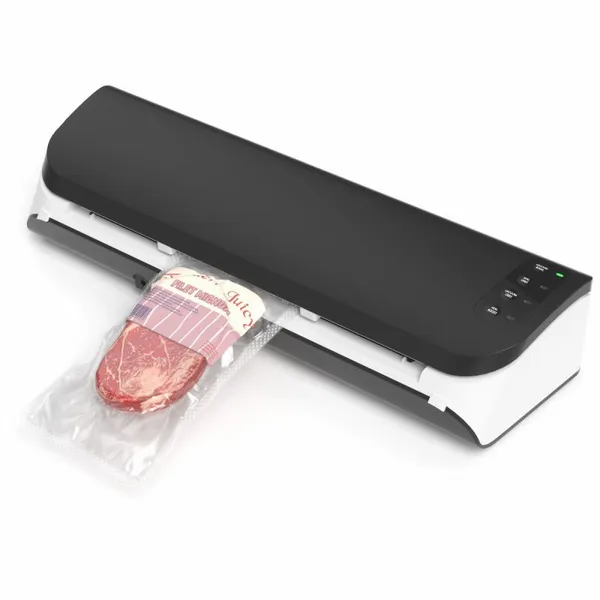 Read More
 -
Food Vacuum Sealers Explained: How They Work, Types, and Key Features
August 10, 2026A food distributor in Eastern Europe contacted us some time ago with a practical problem. They had been shipping vacuum-packed dry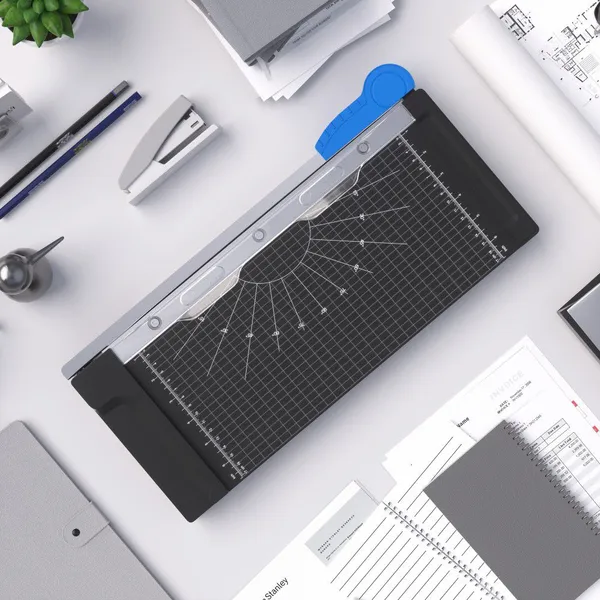 Read More

Contact Us
Recommended Products
-
 Premium 9.5-inch A4 Pouch Laminator Machine 1 Minute Warm-up High Speed Laminating Machine With NTC IDLM034US$ 8.00 - 10.80MOQ: 1000 Pieces
 -
Premium 4-roller Pouch Laminator A3 13-inch High Speed Thermal Laminating Machine 1 Min Warm-up Office Hot Lamination (LM341B)US$ 32.00 - 34.00MOQ: 500 Pieces
-
Premium A3 13" Pouch Laminator One Minute Warm-Up High Speed Thermal Laminating Machine Machine Max 150 Microns IDLM024US$ 11.80 - 13.90MOQ: 1000 Pieces
-
Premium Discbound Binder Hole Puncher Disc Binding Machine Mushroom Hole Punch Arc Binder Discbound Planner IDBM011US$ 19.00 - 28.00MOQ: 1000 Pieces
-
Premium 12-heet Comb Binding Machine Documnet Binding Machine Plastic Comb Binder Paper Binding Machine (CB12)US$ 11.50 - 13.80MOQ: 500 Pieces
-
Premium Spiral Coil Binding Machine 4:1 5:1 6mm Encuadernadoras Espiral Encadernacao Espiral Madeira (SB10)US$ 19.00 - 24.00MOQ: 500 Pieces
-
Premium 12 Inches A4 Thermal Binding Machine Hot Binding Machine Thermal Binder for Thermal Binding Covers (TB200)US$ 8.00 - 19.50MOQ: 500 Pieces
-
JACC 2-in-1 A3 & A4 Thermal Binding Machine 13\" Laminator &12\" Book Binding Machine IDLM037 Electric PowerUS$ 15.00 - 25.00MOQ: 500 Pieces
-
Premium 8 Sheets 21 19 Hole Comb Binding Machine Document Binding Machine Note Book Binding Machine (CB8)US$ 8.00 - 10.30MOQ: 500 Pieces
-
Premium Paper Cutter B4 15 Inch Paper Trimmer Machine Manual Paper Guillotine Machine Metal Baseplate (GL410B)US$ 8.20 - 9.50MOQ: 1000 Pieces
-
A4 Size GL408 Paper Guillotine Cutter – Compact Design for Office, Photo & Card CuttingUS$ 5.5MOQ: 1000 Pieces
-
Premium 14L 8 Sheets Cross Cut Paper Shredder Machine Document Shredding Machine Home Office Shredder IDPS004US$ 15.99 - 17.90MOQ: 500 Pieces
-
Premium 11L 6 Sheets Cross Cut Paper Shredder Machine Document Shredding Machine Home Office Shredder IDPS003US$ 12.50 - 14.00MOQ: 500 Pieces
-
Premium 7L Home Office Paper Shredder 6 Sheets Strip Cut Document Shredding Machine IDPS002 With Electric Power SourceUS$ 7.99 - 8.88MOQ: 500 Pieces
-
Premium 8L 4 Sheets Cross Cut Paper Shredder Machine Document Shredding Machine Office Shredder IDPS001US$ 9.50 - 10.50MOQ: 500 Pieces
-
Premium Portable Food Vacuum Sealer Machine With Rechargeable Li-ion Battery Food Saver for Sous Vide (FVS0351Li)US$ 8.10 - 8.90MOQ: 1000 Units
-
Premium Handheld Vacuum Sealer Mini Vacuum Pump for Reusable Vacuum Zipper Bags and Food Storage Containers (HVS3501)US$ 2.99 - 3.90MOQ: 2000 Units
-
Premium Food Vacuum Sealer Machine Food Saver Vacuum Preservation and Sealing Machine With Hose for Sous Vide (FVS2201)US$ 7.00 - 8.90MOQ: 1000 Units
-
Food Vacuum Sealer Machine Dual Heat Sealing Lines With Bag Cutter Double Seal Strip for Airtight Moist Food Storage (VS6)US$ 12.00 - 13.50MOQ: 1000 Units
-
Premium Portable Handheld Mini Vacuum Sealer Pump USB Rechargeable Air Suction Pump Vacuum Wine Jar Sealer IDFVS018US$ 4.50 - 5.10MOQ: 1000 Units